

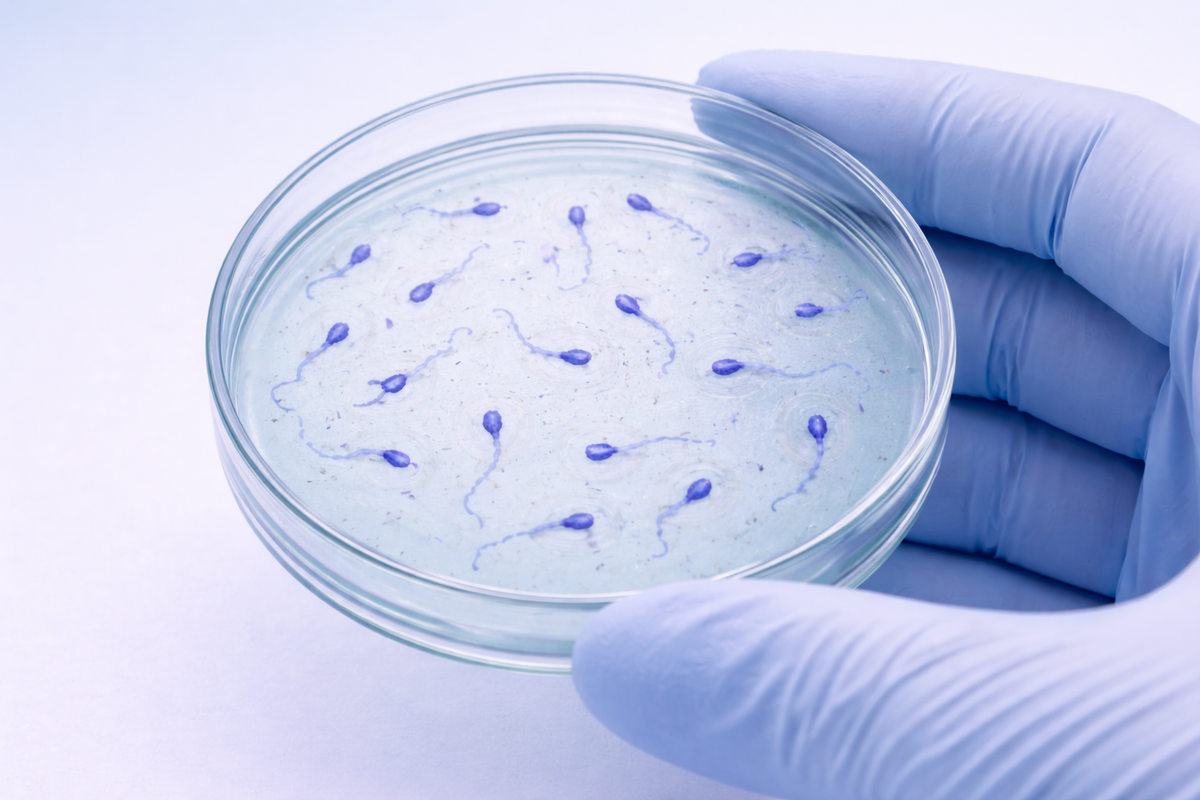

When a miscarriage happens, the focus almost always turns to the woman’s body. Hormones. Uterine health. Egg quality.
And while all of these matter, they tell only half the story. Because every embryo is created from two equal genetic contributions — one from the egg, and one from the sperm. So the question is:
If sperm provides 50% of the DNA…can it also contribute to miscarriage?
The answer, backed by research, is yes.
Why Miscarriage Is Usually Blamed on Women
“The majority of miscarriage conversations focus on maternal factors.”
That’s not because sperm isn’t important — it’s because it’s often not routinely evaluated. Even in cases of repeated pregnancy loss, testing is heavily skewed toward:
- Hormones
- Uterus
- Ovulation
While the male side is often reduced to a basic semen analysis — which looks at count, motility, and shape, but not genetic quality. This creates a gap. Because a sperm can look normal under a microscope…
and still carry damaged DNA.
The Science: 50% of DNA Comes From Sperm
“Approximately 50% of miscarriages are due to chromosomal abnormalities.” (ACOG Practice Bulletin, 2018)
These abnormalities occur when the embryo has missing, extra, or damaged genetic material — making normal development impossible. What’s often overlooked is this:
👉 Chromosomal errors don’t come only from the egg
👉 They can also originate from the sperm
Which means sperm quality plays a direct role in:
- embryo development
- implantation success
- and whether a pregnancy continues or ends early
What Is Sperm DNA Fragmentation?
Sperm DNA fragmentation refers to damage or breaks in the genetic material carried by sperm. Unlike standard semen parameters, this isn’t something you can see in a routine test. But it matters — a lot.
Because once fertilisation happens, the embryo depends on intact, stable DNA to divide and grow correctly in the earliest days of life.
If that DNA is compromised, the embryo may:
- fail to implant
- stop developing early
- or result in miscarriage
How Damaged Sperm Can Lead to Miscarriage
Research has consistently found that high sperm DNA fragmentation is associated with increased miscarriage risk, even when fertilisation occurs successfully.
This explains a pattern many couples experience:
- Pregnancy happens easily
- But it doesn’t sustain
From a biological perspective, what’s happening is this:
Fertilisation is only the beginning.
The real challenge is healthy embryo development.
And that depends on the quality of both egg and sperm DNA.
What Causes Poor Sperm Quality?
Sperm health is highly sensitive to overall lifestyle and metabolic health. Some of the most common contributors include:
Oxidative Stress
Excess free radicals can damage sperm DNA, especially when antioxidant intake is low.
Smoking and Alcohol
Both are strongly linked to increased DNA fragmentation.
Poor Nutrition
Deficiencies in nutrients like zinc, folate, and antioxidants impact sperm formation and protection.
Obesity and Insulin Resistance
Metabolic dysfunction affects hormone balance and sperm production.
Heat and Environmental Exposure
Frequent laptop use on the lap, tight clothing, pollution, and toxins can all impair sperm quality.
Age
While often overlooked, sperm quality — including DNA integrity — declines with age.
Can You Improve Sperm Quality Before Pregnancy?
This is where things become important. Because unlike genetic conditions, sperm quality is highly modifiable. Sperm production follows a cycle of approximately 70–90 days.
Which means:
👉 Changes made today by men can directly impact their sperm quality in the next 2–3 months itself.
Research shows that improvements in:
- Nutrition
- Antioxidant intake
- Metabolic health
- Lifestyle habits
can reduce DNA damage and improve overall sperm function.
When Should You Test Sperm in India?
In many cases, sperm DNA testing is not part of routine fertility evaluation. But it may be worth considering if:
- there has been one or more miscarriages
- pregnancy occurs but doesn’t sustain
- standard reports appear “normal” but outcomes aren’t
Tests like sperm DNA fragmentation index (DFI) are available in India, but are still underutilised. This often leads to a situation where:
- the female partner undergoes repeated testing
- while a key piece of the puzzle remains unchecked
The Truth About Miscarriage: It’s Not Just the Egg
Miscarriage is often described as “bad luck.” And sometimes, it is.
But research shows that in many cases, there are underlying biological factors influencing the outcome. Some of these are maternal. Some are environmental.
And some — importantly — are male factors. Recognising this doesn’t shift blame.
It creates clarity. Because when both sides of the biology are understood,
there’s more that can be done before trying again.
Final Thought
You cannot control every variable in pregnancy. But you can influence more than you’ve been told. And that includes sperm health. So instead of asking: “Is my body capable of sustaining a pregnancy?”
A better question might be: "Are both of us biologically prepared for it?” Because when it comes to miscarriage, it’s not just about the egg.